







5 min read Best Freelancing Platforms for Businesses in 2026
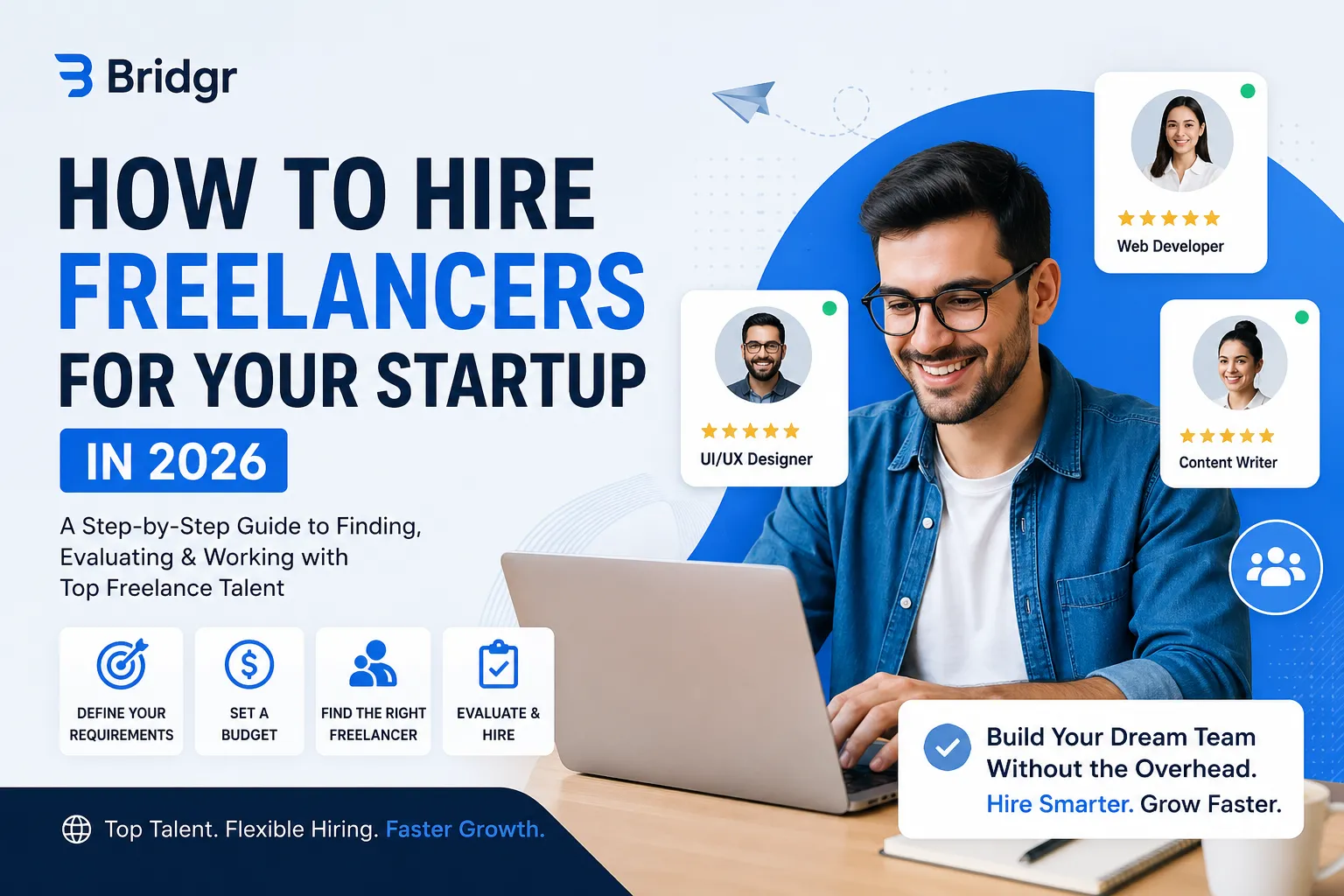
Learn how to hire freelancers for your startup in 2026. A step-by-step guide to finding, evaluating, and working with top freelance talent efficiently.
Introduction
Building a startup in 2026 is faster, leaner, and more competitive than ever. One of the biggest challenges founders face is hiring the right talent without burning through their budget. That’s exactly why many founders are searching for how to hire freelancers for startup growth instead of relying on traditional hiring.
Freelancers give startups the flexibility to scale quickly, access global expertise, and stay cost-efficient. But hiring the right freelancer isn’t just about posting a job and picking the cheapest option—it requires strategy.
In this guide, you’ll learn how to hire freelancers for your startup step-by-step, avoid costly mistakes, and build a reliable remote team that actually delivers results.
Why Startups Prefer Freelancers Over Full-Time Hiring
Startups operate in uncertainty. Flexibility and speed matter more than long-term commitments.
1. Cost Efficiency
Hiring full-time employees involves:
- Salaries
- Benefits
- Office costs
Freelancers eliminate these overheads. You only pay for the work done, making it ideal for early-stage startups.
2. Flexibility
Need a designer this week and a developer next month? Freelancers let you:
- Scale up or down instantly
- Hire per project
- Avoid long-term contracts
3. Faster Execution
Traditional hiring can take weeks or months. Freelancers can:
- Start within hours
- Deliver faster
- Help you launch quickly
Step-by-Step Guide to Hiring Freelancers
If you want real results, follow this structured approach.
Step 1 – Define Your Requirements
Before hiring, get clear on what you need.
Ask yourself:
- What is the exact task or project?
- What skills are required?
- What is the deadline?
Example:
Instead of saying “I need a website,” say:
“I need a 5-page responsive website with a modern UI, built in React, delivered within 10 days.”
Clarity attracts better freelancers.
Step 2 – Set a Budget
Budgeting helps filter the right talent.
- Low budget → Beginners or simple tasks
- Mid-range → Skilled freelancers
- High budget → Experts or complex projects
Avoid going too cheap—it often leads to poor quality and rework.
Step 3 – Choose the Right Platform
Where you hire matters just as much as who you hire.
Popular options include:
- Gig-based platforms (quick tasks)
- Proposal-based platforms (custom projects)
Modern platforms like Bridgr make this easier by combining multiple service categories in one place—design, development, marketing, AI, and more—so startups don’t have to jump between different websites.
Step 4 – Evaluate Freelancers Properly
This is where most startups go wrong.
Don’t just look at price. Evaluate:
Portfolio
- Check past work
- Look for similar projects
Reviews & Ratings
- Consistency matters more than one good review
Communication
- Are they responsive?
- Do they understand your requirements?
A freelancer who communicates well will save you time and frustration.
Step 5 – Start with a Test Project
Never commit immediately to a large project.
Instead:
- Assign a small paid task
- Evaluate quality and speed
- Check professionalism
If it works out, you can scale the relationship.
Where to Hire Freelancers (Best Platforms)
There are many freelance platforms available today, but choosing the right one depends on your needs.
Bridgr
A modern, all-in-one freelancing platform designed for startups and businesses:
- Multiple service categories
- Easy hiring process
- Budget-friendly options
Fiverr
Best for:
- Quick, fixed-price gigs
- Small tasks
Upwork
Best for:
- Long-term projects
- Experienced professionals
For startups, using a platform like Bridgr can simplify the process by offering everything in one place without unnecessary complexity.
Common Mistakes to Avoid
Even experienced founders make these mistakes.
1. Choosing the Cheapest Option
Low cost often leads to:
- Poor quality
- Missed deadlines
- Extra costs later
2. Not Checking Work Properly
Always review:
- Portfolio
- Past results
- Real examples
3. Poor Communication
Unclear instructions lead to:
- Delays
- Misunderstandings
- Frustration
4. Skipping Contracts or Agreements
Always define:
- Scope
- Timeline
- Payment terms
Pro Tips for Working with Freelancers
Want better results? Follow these proven tips.
1. Write Clear Briefs
A good brief includes:
- Project details
- References
- Expected outcome
2. Use Milestones
Break projects into smaller parts:
- Reduces risk
- Improves tracking
- Ensures accountability
3. Build Long-Term Relationships
Great freelancers are valuable assets.
Instead of hiring repeatedly:
- Build a trusted team
- Work with the same people
- Increase efficiency over time
Why Bridgr is Ideal for Startups
Startups need simplicity, speed, and affordability—and that’s exactly where Bridgr stands out.
What makes Bridgr different:
- Clean and modern interface
- Wide range of services
- Startup-friendly pricing
- Faster hiring process
Instead of juggling multiple platforms, startups can use Bridgr as a single hub for all freelance needs, making operations smoother and more efficient.
Conclusion
Hiring freelancers is no longer just an option—it’s a competitive advantage for startups in 2026.
By learning how to hire freelancers for your startup, you can:
- Save costs
- Move faster
- Access global talent
The key is to follow a structured approach:
Define → Evaluate → Test → Scale
Startups that master freelance hiring build stronger, more agile teams—and ultimately grow faster.